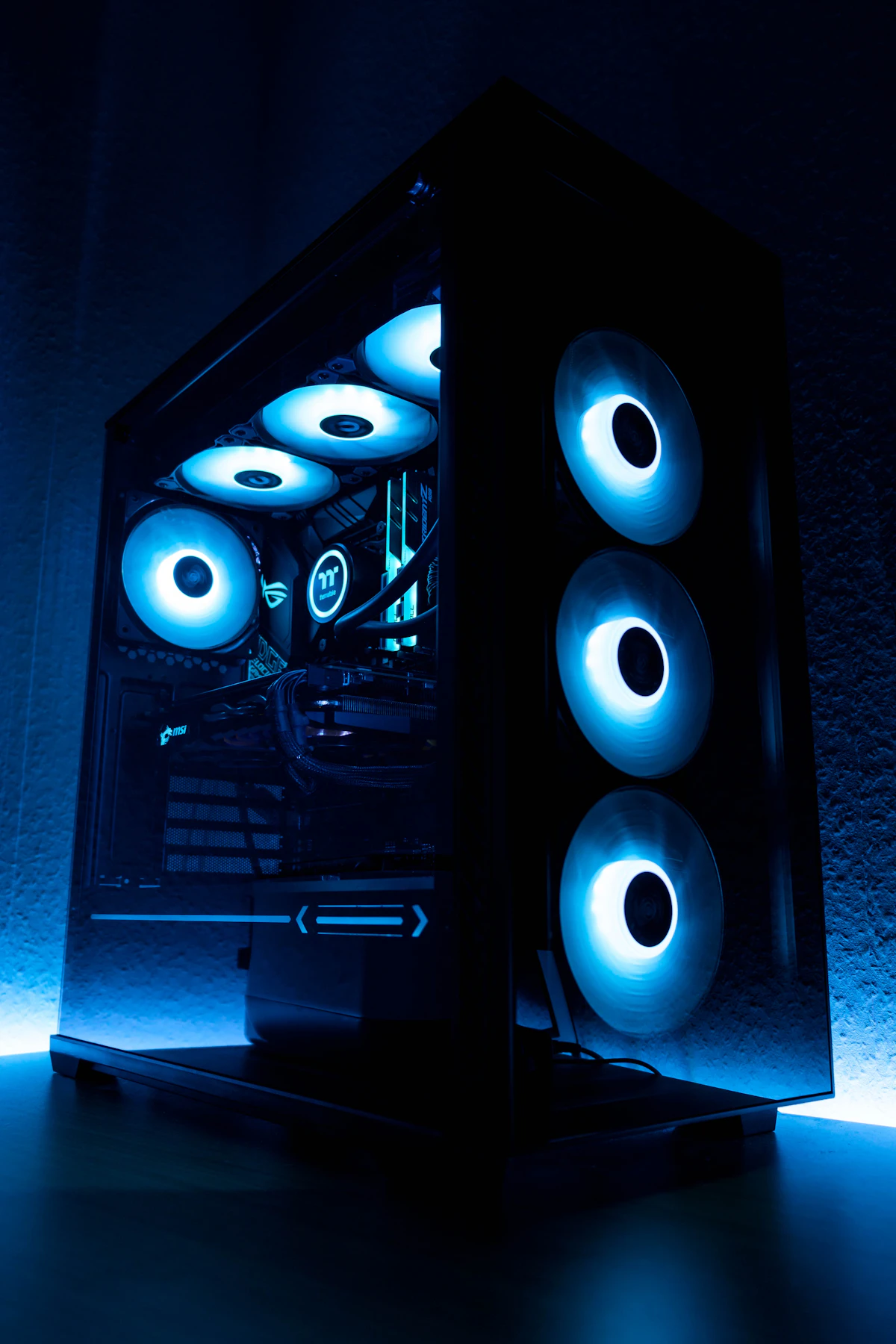
Few PC gaming releases in the history of interactive entertainment carry the monumental performance expectations of Grand Theft Auto VI. As Rockstar Games prepares to deploy the RAGE 9 engine onto modern desktop hardware, PC gamers around the world are auditing their processor speeds, system memory bandwidth, and graphics card VRAM pools to determine if their rigs are ready for the State of Leonida.
Given the cutting-edge implementation of hardware ray tracing, dense procedural pedestrian simulations, and high-frequency volumetric weather in GTA 6, the hardware baseline will be substantially higher than any previous Rockstar title. In this comprehensive technical analysis, we evaluate the official hardware architectural targets, minimum thresholds, recommended configurations, and 4K Ultra Ray-Tracing enthusiast benchmarks.
1. The Hardware Architecture Paradigm Shift
Grand Theft Auto V launched on PC in 2015 with remarkable scalability, running smoothly even on dual-core CPUs and mechanical hard disk drives. However, that era of PC gaming has permanently ended. Grand Theft Auto VI is built from the ground up to take advantage of multi-core CPU threading, ultra-fast DirectStorage SSD streaming, and dedicated hardware BVH ray-tracing accelerators.
Traditional mechanical hard drives (HDDs) will be entirely unsupported. The extreme asset density of Vice City—where high-resolution 4K textures, volumetric clouds, and thousands of distinct character audio files are constantly streamed—requires a minimum PCIe NVMe solid-state drive with at least 3,500 MB/s sequential read throughput to avoid severe asset pop-in and texture streaming hitching.
DirectStorage 1.2 enables GPU decompression, allowing compressed textures stored on the NVMe SSD to be sent directly to graphics memory via DMA (Direct Memory Access), bypassing CPU decompression bottlenecks. This drastically cuts loading times and guarantees seamless transitions when flying high-speed jets across city districts.
| Hardware Tier | Target Performance | Processor (CPU) | Graphics Card (GPU) | RAM / VRAM | Storage Requirement |
|---|---|---|---|---|---|
| Minimum Specs | 1080p @ 30 FPS (Low Settings) | Intel Core i5-10600K / Ryzen 5 3600 | NVIDIA RTX 2060 (6GB) / RX 5700 (8GB) | 16 GB RAM / 6 GB VRAM | 150 GB NVMe SSD |
| Recommended Specs | 1440p @ 60 FPS (High Settings) | Intel Core i7-12700K / Ryzen 7 5800X3D | NVIDIA RTX 3080 (10GB) / RX 6800 XT (16GB) | 32 GB RAM / 10 GB VRAM | 150 GB NVMe PCIe 4.0 SSD |
| 4K Ultra Enthusiast | 4K @ 60+ FPS (Ultra + Full RT) | Intel Core i9-14900K / Ryzen 7 7800X3D | NVIDIA RTX 4080 Super / RTX 4090 (24GB) | 32-64 GB RAM / 16+ GB VRAM | 150 GB High-Speed Gen4 SSD |
2. GPU VRAM Consumption and Ray Tracing Demands
Video Memory (VRAM) will be the most critical performance differentiator for GTA 6. Standard 8GB graphics cards, while historically sufficient for 1080p gaming, will face extreme memory pressure when running GTA 6 with hardware ray tracing enabled. In a densely populated Vice City environment at 1440p resolution, BVH ray-tracing acceleration structures, uncompressed texture buffers, and render targets easily exceed 10.5 GB of allocated VRAM.
To avoid severe memory stutters, gamers should aim for modern GPUs equipped with at least 12GB to 16GB of GDDR6/GDDR6X memory. Features like NVIDIA DLSS 3.7 (Super Resolution + Frame Generation) and AMD FSR 3.1 will be essential tools for boosting framerates in heavy metropolitan areas where ray-traced reflections on rain-slicked streets demand heavy shader calculations.
Gamers on older hardware without dedicated hardware RT cores (such as NVIDIA GTX series) will be unable to launch the game, as modern DirectX 12 Ultimate shader models (Feature Level 12_2) are mandatory for RAGE 9 execution.
3. CPU Multi-Threading and Crowd Simulation Limits
While graphics cards render pixels, the CPU in GTA 6 is tasked with calculating the game's living simulation: pedestrian neural pathfinding, vehicle traffic flow, police pursuit logic, ballistics, and audio occlusion. Running around Ocean Drive with hundreds of dynamic NPCs will heavily tax multi-core processors.
Processors equipped with 3D V-Cache—such as AMD's Ryzen 7 7800X3D—are projected to deliver stellar 1% low frame rates, minimizing frame drops during chaotic multi-car explosions and high-speed police chases. Gamers running older 4-core/8-thread CPUs will experience significant CPU frame time spikes regardless of how powerful their graphics card may be.
4. Memory (RAM) and SSD Storage Footprint
A minimum of 16 GB of system RAM will be required to launch the game, but 32 GB of high-speed DDR4 (3600 MHz) or DDR5 (6000 MHz) is strongly advised. Background operating system tasks, browser tabs, and modern anti-cheat services operating alongside GTA 6 will easily consume 20+ GB of total memory footprint.
The total install size is projected to exceed 150 GB at launch, expanding further with subsequent GTA Online updates and high-resolution texture pack add-ons. Gamers should plan dedicated NVMe partition space in advance to ensure smooth installation and patching.
5. Graphical Settings and PC Customization Options
Rockstar's PC releases are famous for comprehensive graphics configuration menus. GTA 6 on PC will include detailed adjustment sliders for:
- Pedestrian & Traffic Density Sliders: Scale crowd numbers from console-standard up to dense hyper-crowds.
- Ray-Traced Ambient Occlusion & Reflection Quality: Toggle RT bounce counts, ray-traced shadows, and translucent glass refraction.
- Volumetric Cloud & Fog Quality: Adjust cloud density and light transmission steps during hurricane weather fronts.
- Water Caustics and Foam Resolution: Control ocean wave physics resolution and white water shoreline simulation.
6. Frequently Asked Questions (FAQ)
Q1: Will GTA 6 release simultaneously on PC and consoles?
Historically, Rockstar Games launches its flagship titles first on current-gen consoles, with a polished PC edition following 12 to 18 months later. However, industry analysts anticipate a narrower release window for GTA 6.
Q2: Can I run GTA 6 on a gaming laptop?
Yes, provided the laptop features modern hardware (RTX 4060 Mobile or higher, modern 8-core CPU, and 16+ GB RAM). Thermal throttling must be managed properly due to prolonged CPU/GPU load.
Q3: Is Windows 10 supported or is Windows 11 required?
While Windows 10 64-bit (Version 22H2) will run the game, Windows 11 is recommended for optimized DirectStorage 1.2 throughput and better hybrid CPU core scheduling.
Q4: Will GTA 6 support ultrawide monitors and multi-monitor setups?
Yes. RAGE 9 native PC builds include full support for 21:9 and 32:9 ultrawide aspect ratios, uncapped framerates, FOV sliders, and customizable dual-monitor telemetry screens.
Q5: Is Steam Deck or ASUS ROG Ally capable of running GTA 6?
Handheld gaming PCs with 15W APUs will likely struggle below 30 FPS at native resolution due to extreme CPU crowd calculations and memory bandwidth limits, though cloud streaming options like GeForce NOW will be viable.